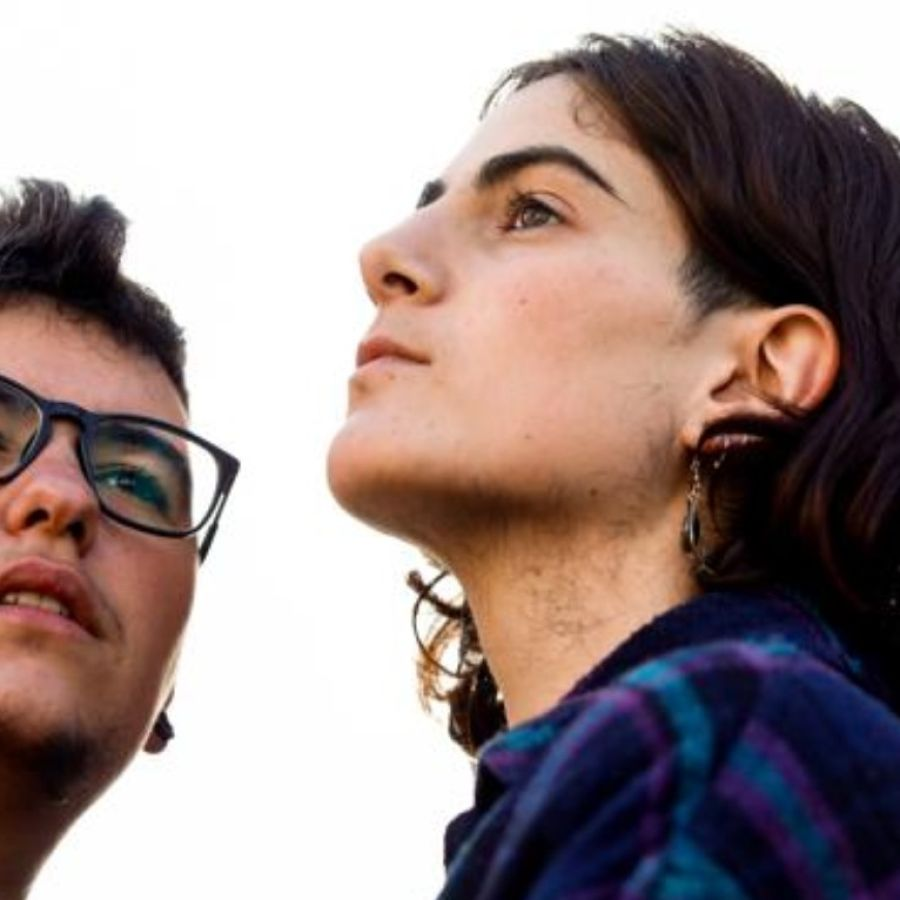
Although it’s not visible, this is a common theme. Many women with excessive hair growth feel they have to hide; they feel self-conscious, are harassed, and spend their lives ashamed of something that isn’t a disease, isn’t contagious, and doesn’t define who they are as individuals.
Many women get tired of shaving, of being slaves to tweezers, razors, or razors, and decide to let it grow, and that’s okay too. In fact, well-known activists, like Harnaam Kaur , have used their facial hair as a banner to speak out against the aesthetic parameters that cause pain and anguish in those who don’t fit them.
Kaur is a model and, after difficult years facing depression and bullying , she is also an example of female empowerment by showing that having a beard—the one she got tired of waxing—doesn’t make her any less of a woman.
No, it is not a disease
This isn’t about the hair you have on your arms or legs. Women have hair on their faces, legs, armpits, and pubic areas. We do! And that’s okay and it’s natural. But hirsutism isn’t about having noticeable hair after a couple of months without shaving, but rather the appearance of copious amounts of thick, dark hair where women don’t usually have hair naturally: the chest, around the nipples, the chin, and the back.
The American Society for Reproductive Medicine defines it as the growth of long, coarse hair on the face, chest, arms, and legs of women following a pattern similar to that of men and is one of the symptoms of diseases associated with androgens, the male sex hormones.
However, hirsutism can also be idiopathic or familial. That is, as described in Cuídate Plus , it is caused by a greater sensitivity of the skin to androgens, or, due to a familial tendency, we may have more hair follicles than other people. This means that it is not a disease, a pathology, or a syndrome. However, as mentioned, it can be a symptom, which makes it essential to visit a specialist.
Dr. Vladimir Galavis , a gynecologist and oncologist, explains that hirsutism is a symptom that, when combined with others, can define a syndrome. “This symptom involves hard, thick hair growing in women where it shouldn’t: on the chin. It’s a sign of masculinization due to a hormonal disorder. This distinct hair is also seen in the armpits and pubic hair, which in women tends to be distributed in a triangular pattern, while in men it’s untidy and bushy, so as experts we can determine these differences.”
Galavis adds that with hirsutism, this type of hair can be seen in unusual places, such as the chest and back. If it is accompanied by other symptoms such as obesity, acne, baldness or alopecia, or an enlarged clitoris, this is due to a predominantly hormonal disorder that could even have a hereditary component, especially in tumors of the adrenal gland and adrenal hyperplasia. He also emphasizes that most cases of hirsutism are acquired and are most frequently related to polycystic ovary syndrome.